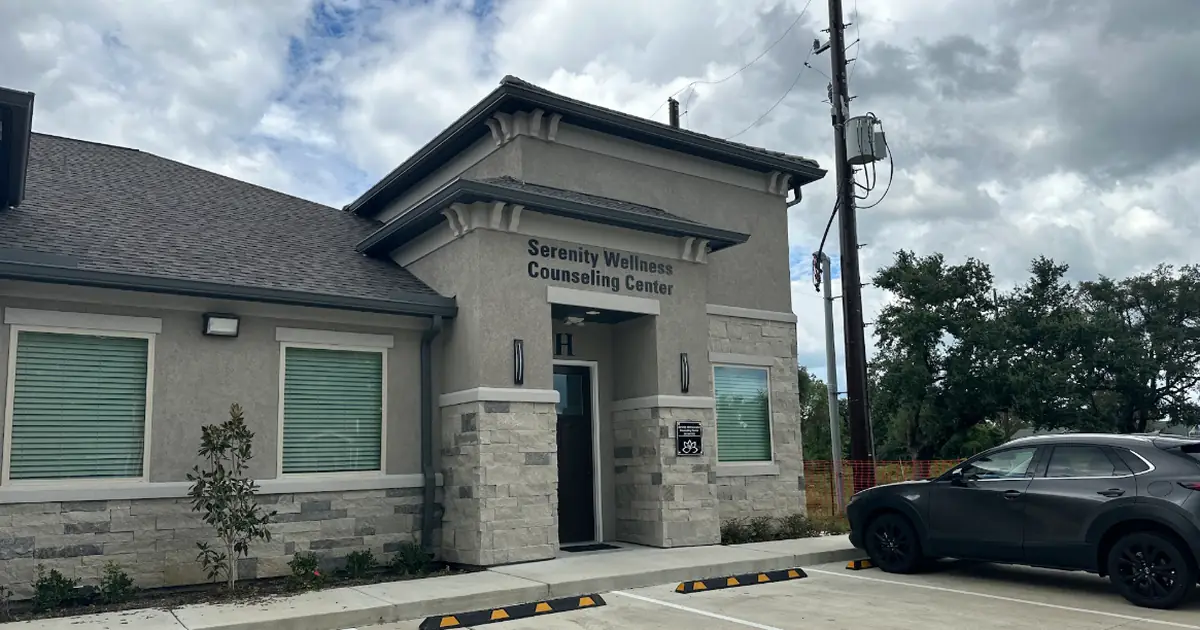
Ketamine-assisted therapy (KAP) combines ketamine, given and monitored by a licensed medical provider, with psychotherapy before, during, and after the session. Serenity Wellness and Counseling Center in Cypress, TX offers it for clients from Cypress, Houston, Katy, Tomball, and Waller. Using ketamine for mental health is off-label, it is not right for everyone, and a medical screening always comes first.
If you have tried talk therapy or medication and still feel stuck, you may have come across ketamine-assisted therapy and wondered what it actually is. This guide explains it in plain terms, so you can decide whether it is worth a conversation.
What is ketamine-assisted therapy?
Ketamine-assisted therapy, also called ketamine-assisted psychotherapy, is a form of treatment where a licensed medical provider gives ketamine and a trained therapist supports you through the experience. The medicine is only one part. The therapy before and after the session is what turns a few hours of experience into lasting change.
At Serenity Wellness and Counseling Center in Cypress, Texas, ketamine-assisted therapy is offered as part of a broader care plan, so it can sit alongside counseling, psychiatric care, or neurofeedback rather than replace them.
How is it different from ketamine alone?
Some clinics focus only on the medication. KAP treats the session as a therapeutic opportunity. Ketamine can loosen rigid thought patterns and make difficult feelings easier to approach for some people, and therapy gives you a place to make sense of what comes up. Preparation helps you know what to expect, and integration sessions afterward help you turn insights into daily habits.
What can it be used for?
People look into KAP for depression, including treatment-resistant depression, for anxiety and panic, and for PTSD and other trauma-related symptoms, especially when other approaches have not helped enough. Treatment-resistant depression generally means depression that has not improved after trying at least two different antidepressants. Research on ketamine for depression is promising for some people, and evidence for ketamine-assisted psychotherapy, including for PTSD, is still growing. It is not a cure, and results vary from person to person.
It also helps to know where it stands with regulators. Ketamine itself is FDA-approved as an anesthetic, and using it for mental health is off-label. The nasal spray esketamine (Spravato) is the form approved for certain types of depression. The FDA has also said ketamine should be used under a health care provider’s care, in a supervised setting, because of effects on blood pressure, sedation, and awareness.
What does the process look like?
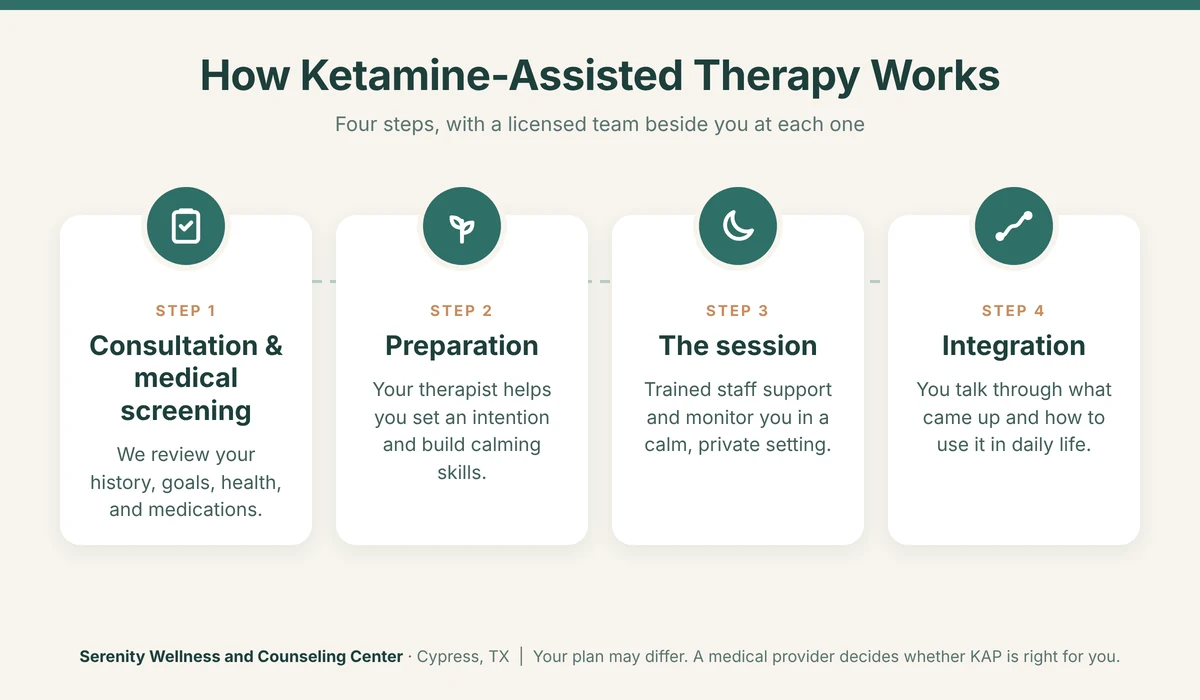
- Consultation and medical screening. You talk with us about your history, symptoms, and goals. A licensed medical provider reviews your health and medications to decide whether KAP is safe for you.
- Preparation. Your therapist helps you set an intention, understand what the session may feel like, and build calming skills.
- The session. You are supported and monitored by trained staff. The experience can include a dreamlike state, so the setting matters.
- Integration. After the session you meet with your therapist to talk through what came up and how to use it.

For a closer look at each step, read our article on what a ketamine-assisted therapy session is like.
What are the risks and side effects?
Ketamine can cause short-term effects, and your care team will explain them before you begin. During and shortly after a session, people commonly report a dreamlike or detached feeling, changes in how they see and hear, nausea, dizziness, and tiredness. Blood pressure can rise, which is one reason you are monitored throughout. Because the experience affects awareness and movement, you should not drive afterward, and you should plan a quiet rest of the day.
Ketamine is also a medicine that can be misused, so it should only be prescribed and monitored by a licensed medical provider, never taken casually or without supervision. Tell your provider about every medication and supplement you take, and about any health conditions, before your first session. If you feel unwell or distressed after a session, contact your provider. If you are in crisis, call or text 988.
Who may not be a good fit?
KAP is not safe or appropriate for everyone. Your medical provider will ask about conditions that can make ketamine risky, such as uncontrolled high blood pressure, certain heart conditions, a history of psychosis or mania, pregnancy, or a history of problems with substances. Be open about your medications and health history. If KAP is not the right first step, we will tell you and talk about other options. You can also compare it with other treatments in our guide to ketamine therapy vs antidepressants vs IV ketamine.
Ketamine-assisted therapy for Houston, Katy, Tomball, and Waller
Our office is at 17844 Mound Road, Suite H, Cypress, Texas 77433, less than 30 miles from the heart of Houston. We serve clients from across the northwest Houston area, including Bridgeland, Towne Lake, Cypress Creek Lakes, Fairfield, and Coles Crossing, along with Katy, Tomball, and Waller.
If you are coming from farther away, a few things make the trip easier. Your first consultation is the place to ask about timing, how many visits your plan is likely to include, and how sessions are scheduled, so you can plan the drive. Bring a list of your current medications. Because you should not drive yourself home after a ketamine session, arrange a ride on session days.
If you are searching for ketamine-assisted psychotherapy in Houston or the northwest Houston area, a first consultation is a simple way to see whether it fits. You can see more about getting here from Houston, from Katy, and at our Cypress office.
How to get started
Use the contact button on this page to request a free consultation. Tell us a little about what you are looking for, and we will explain the next steps. You can also meet our providers. If you are in crisis or thinking about harming yourself, call or text 988 right away.
Frequently asked questions
Is ketamine-assisted therapy legal in Texas?
Ketamine is a legal prescription medicine. Using it for mental health is off-label, which is common in medicine, and it must be prescribed and monitored by a licensed medical provider.
Is ketamine-assisted therapy safe?
Ketamine has been used in medicine for over 50 years, and every session is overseen by a licensed prescriber. It is not safe for everyone, which is why a medical screening always comes first and your provider reviews your health and medications before any session.
Do I need therapy alongside the ketamine?
Yes. The therapy is what makes it ketamine-assisted therapy. Preparation and integration sessions are part of the plan.
How many sessions will I need?
It varies by person and goal. Your plan is set after your consultation and reviewed as you go.
How long does a session last?
The effects of the ketamine itself last about 45 minutes. During that time you rest comfortably, and you may feel far from your body or have trouble moving and speaking. Your provider will explain how much total time to plan for the visit, including settling in and resting afterward, and you should arrange a ride home.
Will insurance cover it?
Coverage varies by plan, and ketamine for mental health is often not covered. Ask us about fees and payment options when you call.
Can I do ketamine therapy at home?
We recommend it only with medical supervision. The FDA has warned that use outside a health care setting means no one is monitoring blood pressure, sedation, or breathing.
Is ketamine-assisted therapy right for me?
It depends on your health, your history, and what you are hoping for. A consultation is the best way to find out.
This article is for general information and is not medical advice. Only a licensed medical provider can decide whether ketamine-assisted therapy is safe for you.
Sources
- FDA alerts health care professionals of potential risks associated with compounded ketamine nasal spray (U.S. Food and Drug Administration, February 16, 2022)
- 988 Suicide & Crisis Lifeline